In the Acuvue commercial, it appears to be a commercial for contacts; however, it is used to show “lipstick” lesbians. The girls in the video are twins which makes the “lipstick” lesbianism in this video the more ridiculous. There is a scene where the camera zooms in on the sisters interlocked hands on one of their thighs. The scene is meant to satisfy the heterosexual male gaze. Also, in the video the interaction between the twins is sexual by the flirtatious touching. For example, when the sister approaches the other, she places her hand on her hip near her bottom. t.A.T.u. is another example of “lipstick” lesbians. The video displays the two singers as intimate partners. They are shown wet in school girl outfits interacting with one another intimately. There is a fence that separates them and the crowd. They are segments leading up to their kiss. The camera angle changes indicate that their performance is for the crowd. They are shown subjectively indicating that their relationship is for the pleasure of their audience rather than themselves. This third image is a one-time character that was shown in a Bones episode. In this episode, the character, Dr. Tanaka, is androgynous. The other characters spend the entire episode contemplating Dr.Tanaka’s gender. By the end of the episode, it is decided that the character is male because he had an erection when one of the female characters approached him. The gender paradigm in our society is binary and the desire to label a person as male or female is obsessive. This character never appears again which demonstrates the margins for sexuality and gender in media. The Christina Aguilera music video “Beautiful” displays homosexual couple and a man in drag. The song is very powerful and validates their sexual “otherness”. There are several scenes where the young, white homosexual couple is displayed intimately in public holding hands and kissing intimately. There is another scene where the tongue in the kiss is shown and passerbys are looking down at the couple. The passerbys looking down at the couple are in a position of power and may be seen as representative of society’s view of LGBTQ relationships. The drag queen is shown in snippets as he dresses. He is first shown in his underwear, then puts on a bra, then makeup, next jewelry, the dress, wig, and lastly smiling in the mirror. The video also critiques ideals of masculinity and femininity. By the end of the video, everyone has rejected the ideas established by society and smiles at themselves despite their “otherness”.
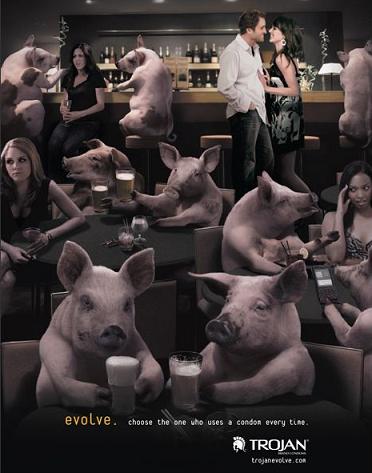
All of these images portray heterosexual relationships whether as a couple or a sexual encounter. The first image, Calvin Klein Jeans advertisement, is in stark black and white displaying a wet and dirty female whose eyes are closed. From her facial expression, hand positioning, and body positioning, she is displayed as vulnerable and in the throws of passion; however, she has all her clothing on. The male is also wet and engaged. His expression is hungry. His position indicates his masculinity through aggression. He is on top and displayed above her. Clearly, he is in the power role. The gender roles are stereotypical. The male is the aggressor, completely masculine, always wanting sex, and in power. The female is passive, vulnerable, always willing to have sex, and subordinate to the male. Another detail to take into account is that both people are youthful. The second image is a Trojan advertisement. The advertisement makes a direct metaphor about men being pigs specifically that they are pigs unless they are wearing a Trojan condom. The background of the ad is a bar; the bar is packed full of pigs drinking beer. There are three single females surrounded by pigs and one female enthralled in intimate conversation with a man. In this advertisement, the woman is the aggressor. The male’s body position indicates a calm and collected persona. He is the alpha male and does not need to pursue; he simply has to accept the woman that engages him. His hand in his pocket indicates a laid back appeal. The woman’s body positioning is close, her hands are on his chest, she’s smiling, and there faces are close together. The positioning of the two of them indicates the intimacy and desire of the moment. The last three artifacts are commercials. The first is a Dentyne Ice commercial. The princess finds her frog and once she kisses it, it turns into her prince. This is based off of the fairytale The Frog Prince. This once again displays the heterosexual relationship. The second commercial is for KY intense. The commercial displays a heterosexual couple in bed. They discuss how they are having better sex with the KY intense. It never shows the couple engaging in intercourse but it does allude to the idea of the woman having an intense orgasm. After the scene indicating her intense orgasm, it shows the couple closer together, more intimate. This commercial alludes to the idea that sex is the only way to engage in intimacy. The last commercial displays heterosexual couples on vacation. The couples are youthful or mature but not old. All these artifacts demonstrate that the socially constructed “appropriate” sex in our society must occur between heterosexual, young couples. They never “have sex”; the sex is assumed. It would be deemed inappropriate for the display of intercourse to be shown.
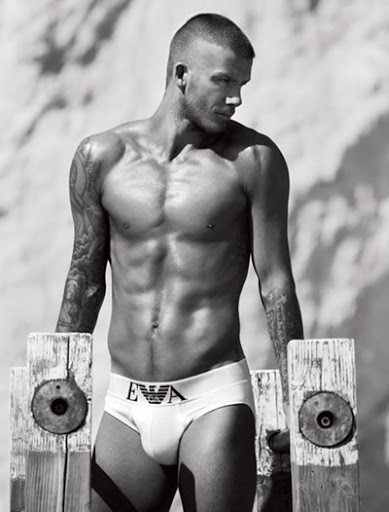
In Lil Wayne’s album cover, he is shirtless and his body language demonstrates a “hard” persona. He is wearing baggy jeans, has money in his pocket, and an escalade in the background. He needs the money, car, and jewelry to demonstrate his power, his status. His gaze is diverted from the camera and mouth is rigid. He is exemplifying the idea that men need the things around them to define their masculinity. The media presents this idea that masculinity is defined by one’s surroundings. The status symbol of power is exemplified by his “bling”, money in his pocket, and the expensive car behind him. That is all that is shown in the image and that is portrayed to be the makeup of a man. On the Esquire cover with Obama, notice the camera angle. It is looking up, which portrays Obama as an aggressor, someone with status, and someone with power. He is dressed in a suit and appears to have a professional occupation. His arms are crossed showing a powerful reservation. He is peering off into the distance. When men are shown on the covers of magazines, they are rarely objectified or scantily dressed. Obama is professional, powerful; he is a man. On the cover of Sports Illustrated, we have LeBron James. We are shown his profile with his eyes closed, dressed in his uniform. He appears deep in concentration, completely aware. In the back of his neck, you can see a vein throbbing and his jaw is tight. He has tattoos on both arms. He gives off the impression of a warrior preparing for battle. To the left of him the text reads in white font “The Power of” then in black font “LeBron”. The only lettering on the page in black font is his name. He is meant to stand out; he is an independent individual. This emphasizes that a man should be like a warrior, be masculine like a warrior preparing for battle. In the Armani underwear ad, we have David Beckham. His muscles are tensed, his eyes narrowed, and his mouth rigid. His facial expression exerts anger and intensity. The tattoos on his arms emphasize his warrior position. Again, the eyes are turned away from the camera. The image is shown objectively even when the only clothing is underwear. Strength and aggression, again, are the illustrators of man. Lastly, in the Chocolate Axe commercial, the man is surrounded by women. In all Axe ads, women are pining over men. Men’s alpha male ego is fed by the amount of women that desire them. Men are once again defined by their surroundings rather than defining themselves.
I chose all of these artifacts for various reasons: the innocence, fragility, neediness, and the roles women play in tasks and relationships. The readings for the week had been: “Can Women Have Sex Like a Man?”: Sexual Scripts in Sex and the City, Pixel Pinups: Images of women in Video Games, and Two Steps Forward, One Step Back: The Selling of Charlie’s Angels and Alias. The first artifact is a Calvin Klein advertisement for their Euphoria fragrance; the second artifact is the Vampire Diaries trailer; the third artifact is the video game promotion for Dreamfall: the Longest Journey; the fourth artifact is the Valentine’s Day trailer; and the last artifact is the Yesterday music video with Toni Braxton and Trey Songz. When examining the first artifact, one can see that the model is white, thin, and beautiful. She appears to be wearing a bed sheet and is holding an orchid. The name of the orchid flower is derived from the Greek word orchis, meaning testicle. Euphoria means a feeling of happiness, confidence, or well-being sometimes exaggerated in pathological states as mania. The image in this advertisement illustrates the woman as one in a state of euphoria holding onto the purple bedsheet while holding a flower named after the male testicle. In the Sex and the City article, it states, “Women’s fashion magazines proffer specifically feminine roles with the implicit assumption that women need and want instruction on the skills necessary to successfully perform these roles. They offer an exclusionary construction of feminine identity: young, white, beautiful, thin, and heterosexual.” This is what people constantly see being portrayed of women. The Calvin Klein ad is a perfect example. The trailers for Vampire Diaries and Valentine’s Day also promote this idea. The main female roles displayed in these trailers are all “young, white, beautiful, thin, and heterosexual.” In the Vampire Diaries trailer, it also shows women to be weak in that they “need to be saved or protected.” The women portrayed in this trailer are quiet, afraid, and only speak when they are calling out for help or out of fear. The only other times they were vocalized was in their thoughts and when they were being flirtatious. In Valentine’s Day, the trailer displays women as these needy, provocative creatures that need to have a male counterpart to feel complete. The expression on Jessica Alba’s face when she has to correct her statement of “Room for two.” to “Room for one and a dog.” encapsulates this idea that women need to have a man in their life and to be single on Valentine’s Day is essentially wrong. “Television provides a cultural forum through which viewers can learn about their social selves. It can also be influential in identity construction.” This movie trailer dictates a heterosexual life that women are supposed to lead as well as connoting this dependency women should have with men. In the third artifact, the game shows a variety of female characters. Although, one of the heroes is a woman, the character that needs to be saved is also a woman. It, also, displays a woman embraced with a child and again with a man. These embraces signify “motherly” affection and heterosexual intimacy, respectfully. There is also a moment where affection with a crow is displayed to allude to this connection and empathy with nature and animals. Women were also displayed as maids and receptionists. The last artifact similar to the Valentine’s Day trailer exhibits women as in need of male affection. In the music video infidelity arose and she is quickly shown with a new male companion. This alludes to the need for women to constantly be in a heterosexual relationship with the desire for dependency rather than finding independence and solace in being alone.
I chose each of these media artifacts for different reasons. In the first artifact, it has two women in the restroom. Jenny McCarthy is sitting on the toilet as Kelly Clarkson is in the bath tub. This is an advertisement for Candie's shoes; shoes, however, is not what they are selling. Jenny McCarthy is a woman of many talents and began her career as a Playboy model. This is an example of everyday porn in that it alludes to the male fantasy of two women. In examining the advertisement, one can see the gasp on Kelly Clarkson's face and the "whoops" on Jenny McCarthy's. What the cause of these facial expressions is un known but the placement of the women is precise. They are close in proximity and sexually vulnerable. Jenny McCarthy with her underwear down and Kelly Clarkson naked in a tub. The second artifact is the scene in Aladdin where he is on the balcony and under his breath says "teenagers take off your clothes". This is an example of how pornography is tied into everyday media including children's movies. There are different articles that suggest this: Hidden Sexual Messages Found in Disney Movies (http://www.bgsu.edu/departments/tcom/faculty/ha/tcom103fall2003/gp13/gp13.pdf) and a video that explicitly shows the comment:
The third artifact are the urinals that are shaped as women's mouths. These urinals play out the fantasy of urinating on women, more specifically urinating in their mouths. It produces the violence and objectification that can be relayed back to a majority of pornography.
The next artifact is an advertisements for the Longchamp Legend Purse. In the top image, she is sexually positioned with her legs spread open dressed in lingerie. Advertisements are consistently used to portray sexually available women to continue the male fantasy of women that always want sex.
The last two artifacts are used to demonstrate the differences between the female advertisement and the male advertisement for the Shake Weight. In the female advertisement, although the women are clothed, there is a focus on their breasts and cleavage. In the male commercial, the men are shirtless. The machine itself imitates the up and down movements of the "hand job." In these workout videos, both men and women are cut into sections of the body. The primary focus of these advertisements is the body and emphasis is placed in the commercial on the value of image. For women, there is the promotion to be thinner and for men, there is the promotion of being "ripped".
As discussed in class and in the articles, porn is everywhere and camera angles, music, positioning, and lighting are just some of the ways that these everyday images replicate the same ideas as pornography.
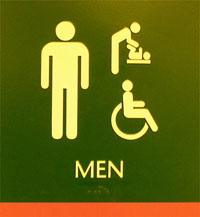
In the Nike campaign to replicate the idea of “real women” in advertising, it helps to reinforce the idea of women as they are rather than these thin, white, skinny women. The images of these women are in black and white and cast in shadows so as not to uncover the ethnicity or race of the women. Only part of the women is photographed so as to commodify her into pieces. Along with each image is a poem or brief monologue spoken by the body part displayed. This one in particular exhibits the woman’s butt. In the lines, it reclaims the “butt” as a body part that has attitude and power in its own sexual prowess. In a sense, it critiques the idea of sexuality in the acceptance of the body rather than be ashamed and desire to be thin. Some bathrooms now exhibit the sign that there are baby-changing tables within the men’s restroom. Originally, only women’s restrooms would have the baby-changing tables. This sign critiques the male gender role. It acknowledges that men, too, can change diapers and care for children. This advertisement is from the Dove campaign for “Real Beauty”. This particular ad focuses on age. The woman displayed has gray and white hair, wrinkles, and age spots to demonstrate her age. The woman is nude and her entire body is shown. The ad says, “too old to be in an anti-aging ad.”, across her breast. Underneath her image it says, “but this isn’t anti-age, this is pro-age.” The ad at first glance reemphasizes the fear of age and how old is not beautiful. The statement underneath the article critiques women’s sexuality as being infinite rather than female beauty lasting only in a woman’s “prime”.
The Vagina Monologues were created to raise awareness about sexual assault. This particular monologue empowers women’s sexuality to the extent of seeking orgasms. It critiques female sexuality as having the ability to be the aggressor and that women are capable of having sexualities outside of the passive stereotype.
This commercial advertisement from Dove demonstrates the use of airbrushing in advertisements and the image of impossible perfection that is being sold. It critiques female sexuality so as to say that, “We are all beautiful. No one really looks like those images in the media.”
In Rihanna's Rated R album, she has a variety of photos selected for each song in the album. In this particular photo, she is dressed in a sexually provocative corset. The most indicative part in this picture is what appears to be barbed wire that is wrapped around her body and is constraining her. Her body language in each image displays a different emotion. In the first frame, her eyes are averted to the right and her eyebrows are tensed while her hands are grasping the wire but are positioned as if bound. Her hair is structured and yet in disarray while her lips are full and pouty. In the second frame, her eyes are closed or looking downward as she kneels over barbed wire with the look of passivity. The third frame displays her arms as bound once again, her face is tilted toward the camera although her eyes are averted to the right again, and her mouth is slightly open in an almost seductive way. In the last frame, her posture is slightly slumped over as her eyes look in the distance, her eyebrows are drawn together and her mouth is slightly open. The first two articles discussed social subordination having four parts: hierarchy, objectification, submission, and violence. It, also, discussed that these four parts are so deeply embedded in mainstream culture. Rihanna is a popular artist within the mainstream and this image in her album portrays hierarchy in the second frame where she is kneeling that sends the image that women are weak or lesser. She's being objectified with the emphasis on her breasts and lips. The submission can be seen in the aversion of the eyes and the helplessness portrayed in the last frame. The barbed wire that is bound to her body not only reemphasizes the weakness and helplessness but signifies the violence toward women.
In this Carl's Jr. commercial, it focuses on the fruit entering Kim Kardashian's mouth, zooms in on her breasts, and flashes some of her thighs. This commercial objectifies women by portraying women as individual body parts: lips, breats, hips, and thighs. The commercial, also, creates the fantasy of insertion of objects (food in this case) orally in a slow seductive manner. The apple in this scenario is representative of the penis which is shown twice slowing entering her mouth. This allows for the allusion that real life replicates this willingness of women to constantly be seen as sexual. In the Jensen/Dines article, the civil rights ordinance drafted by Dworkin and MacKinnon defines "pornography as the 'graphic sexually explicit subordination of women through pictures and/or words'." Although the material is not sexually explicit in terms of pornography, it does allude to oral sex.
Within the first two minutes of the Lady Gaga video, Paparazzi, the viewer can see how sex easily changes to violence. The moment she says, "Stop!", there is some commotion between the two before he pushes her off the balcony. In the commotion, it appears that he does not respond to her cry for him to stop and in response she slaps him. When she had fought back, he pushed her off the balcony. This is a portrayal of domestic violence. Dworkin talked about how women are seen as these sexual beings and that when a woman says no it means yes because a woman would never turn down sex. Pornography and the mainstream media perpetuate this idea that "No doesn't really mean no."
The movie Speak has many significant examples; however, I'll simply focus on the introduction of Kristen Stuart's character, Melinda. As the camera brings up the image of Melinda, you begin to see these black lines over her mouth. It isn't until the camera positions itself to reflect her image in the mirror that the viewer discovers that her mouth is drawn as if it has been sewn shut. The film is about a young girl that is raped; therefore, the introduction is symbolic of her silence and her inability to speak about it at present. Dworkin discusses the role of silence within the female community and quotes The Three Marias of Portugal who said, "Let no one tell me that silence gives consent, because whoever is silent dissents." This image is in grayscale. The woman's eyes are shut and her face is relaxed. She is poised and graceful; her strength is demonstrated in the vein that is popping out of her neck. In Hartley's article, she brings up the point that pornography or any sexual adventurism can be a choice that a woman makes to empower herself. In this image, the woman looks strong. She is fully clothed and yet, she is hanging from a pole. There are strippers that do the same thing in less clothing and that does not make their job a depiction of objectification. At least not for themselves, if that is a choice they are voluntarily making to empower themselves.